When rain helps
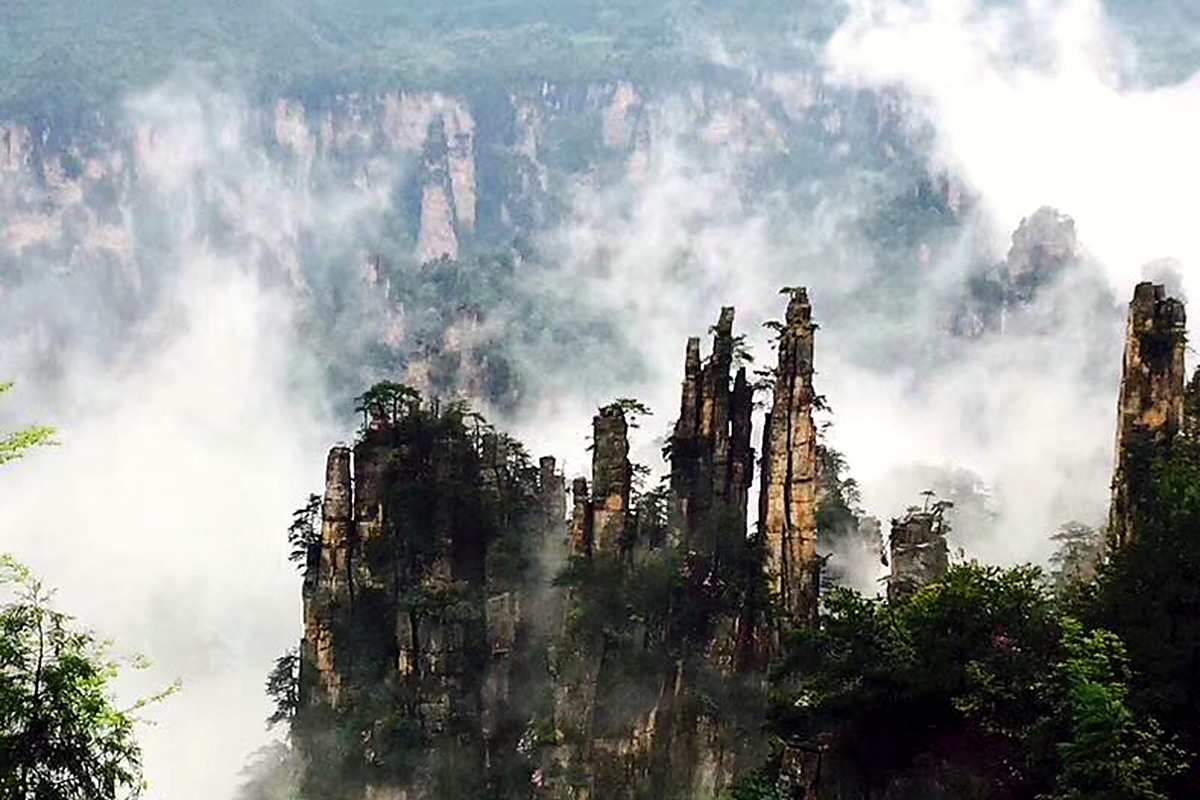
Moist air and warming rock are what build the cloud seas. The mornings after rain are often the most atmospheric of a trip — the pillars appear and disappear between banks of mist.
Bring a light rain shell and covers for your camera. Paths get slick, so footwear with grip matters more than an umbrella on the exposed terraces.
When it really pours
In sustained heavy rain the high viewpoints flatten out and exposed walkways can close. That is the day for Huanglong Cave, with its underground rivers, or the shaded Golden Whip Stream along the canyon floor.
Neither is a consolation prize. The cave stays around sixteen degrees and the valley is at its greenest in rain. We make the call on the morning, based on what the sky is actually doing.
- Light rain, clearing — go up. This is the best mist.
- Steady rain — valley walks and the lower terraces.
- Heavy rain or wind — the cave, or swap the day's order.
- Glass walkway closed — the rest of the mountain still works.
Why the order of days matters
We build one flexible day into most routes. It is what lets us follow the weather instead of fighting it — the cave on a soaked morning, the terraces when the sky clears by noon.
If every day is fixed to a different city, that flexibility disappears. That is one reason we do not pack too many stops into a short trip.
Common questions
Usually not. Rain here is often brief and followed by clearing, which produces the mist the mountains are known for. We adjust the order of days.
It can close in high wind or for maintenance. When that happens we use the canyon floor or another site rather than leave you waiting.
Yes — Huanglong Cave is underground and unaffected by the weather above. It stays cool year-round.
A light rain shell, shoes with grip, and a cover for your camera. An umbrella helps in the towns, less so on the windy terraces.